Handover and snag list
A dialysis room is only ready for operator sign-off once the space is clean, the services have been checked and the handover file is in order. We close each fit-out with a practical snag process so the operator team can review the room methodically and prepare for commissioning.
What is included at handover
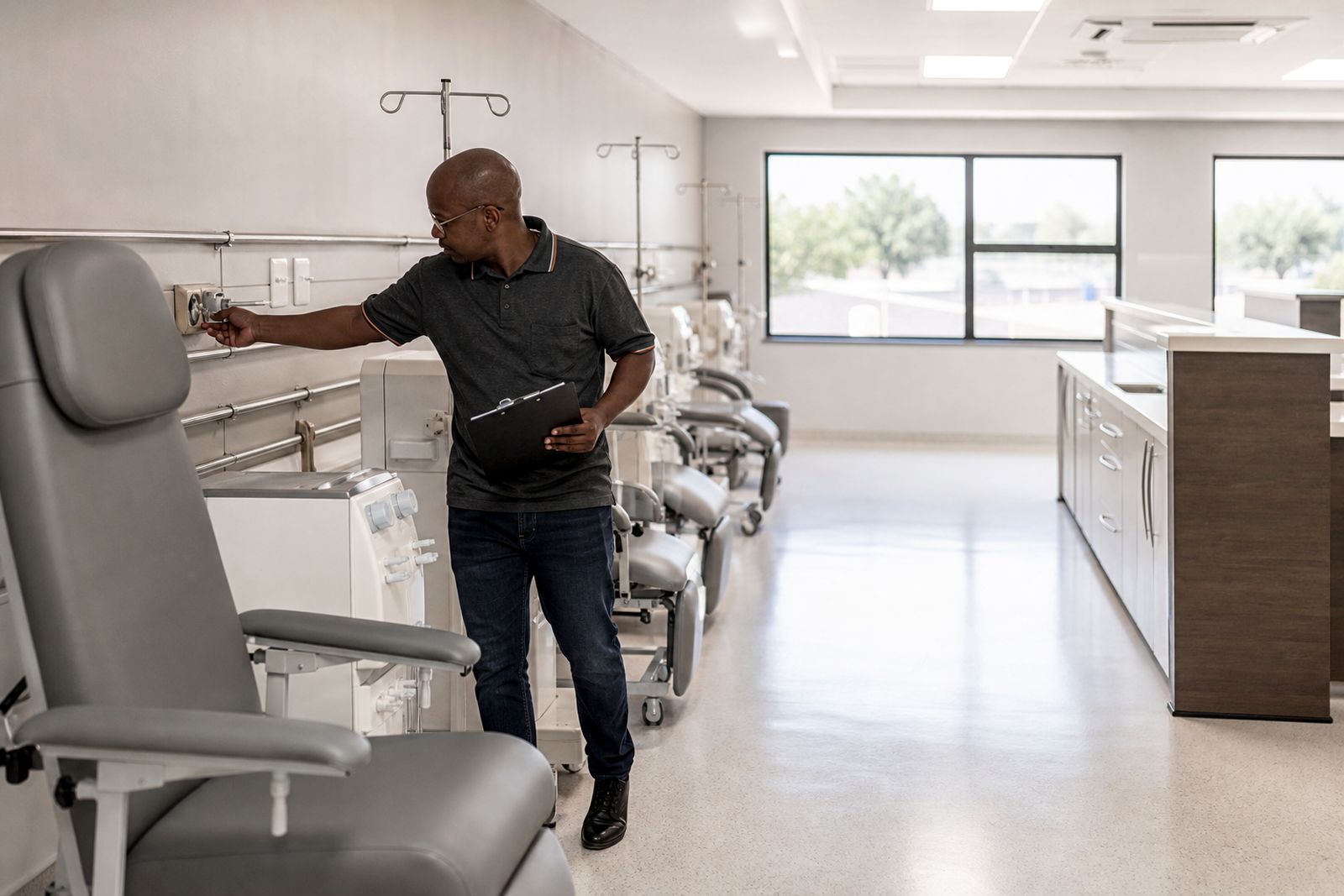
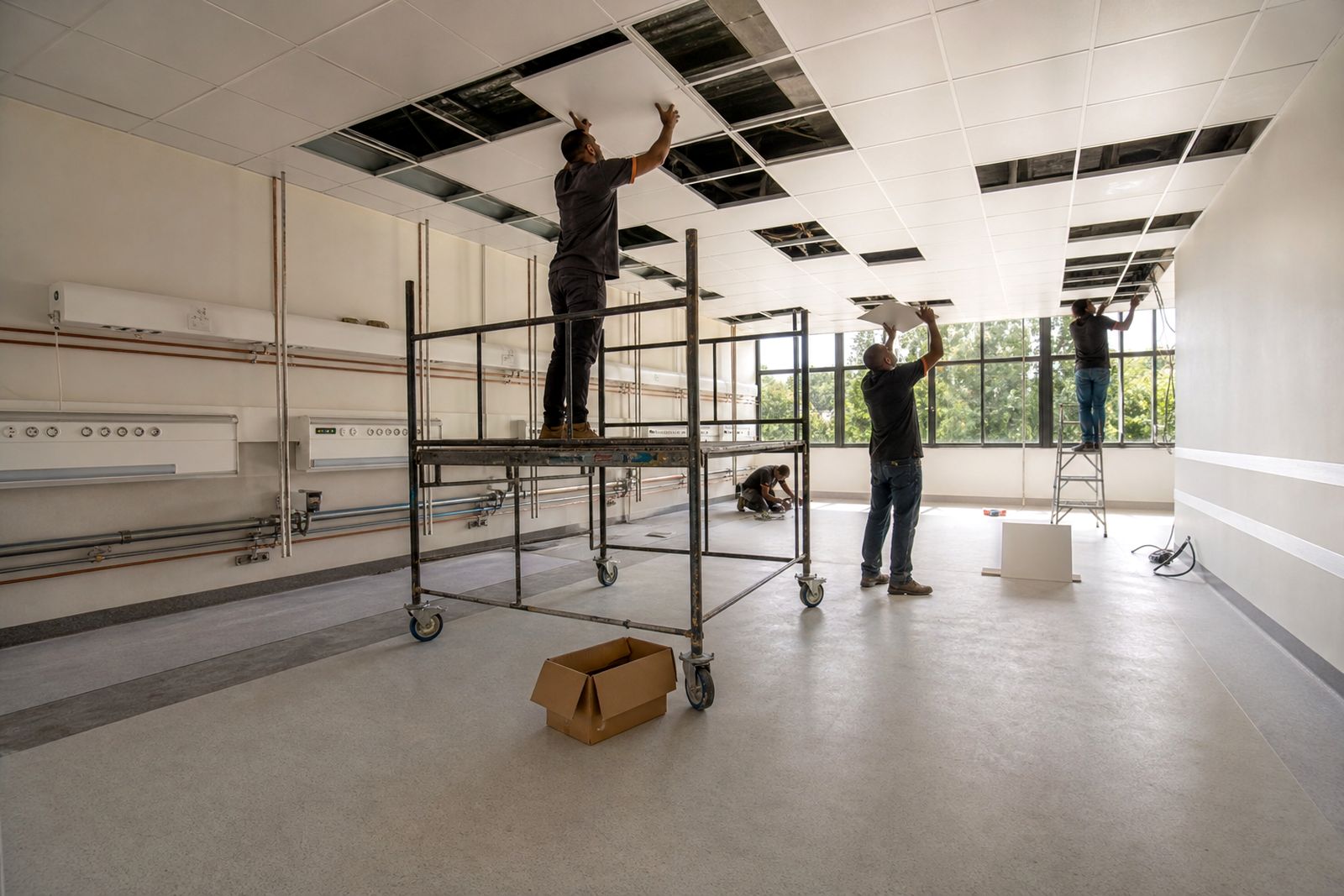
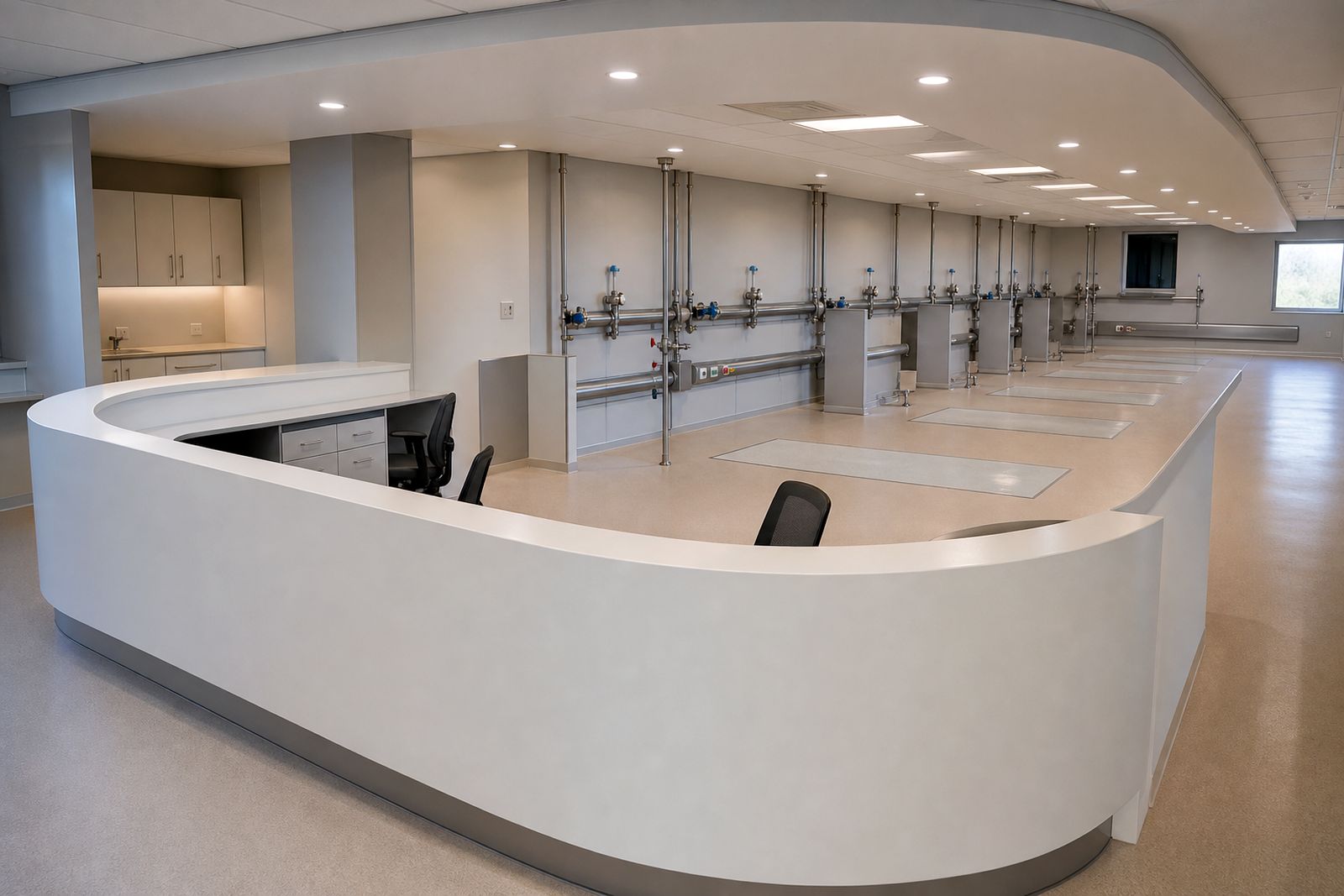
Our handover stage covers the final cleaning, service checks, room-by-room review and issue logging needed before the operator takes the area into its own commissioning process. We hand over the completed fit-out works that fall within our scope, including treatment-chair bay layouts, nurse station joinery, cabinetry, wipe-clean wall finishes, smooth flooring, plumbing runs, drainage points, lighting, socket outlets and related builder's work.
We do not give clinical advice, supply dialysis machines or approve patient treatment use. The operator's clinical and engineering team reviews the room against its own brief and signs off what is acceptable for its facility. Where work has been done in a live hospital or day unit, we also check that temporary protection, dust barriers and access routes have been removed and the surrounding area is left tidy and safe.
- Builder's clean of floors, skirtings, counters and accessible wall surfaces
- Visual check of finishes for chips, gaps, sealant breaks and scratches
- Functional checks on lights, socket outlets, switches and plumbing points
- Review of cabinetry doors, drawers, locks, handles and silicone joints
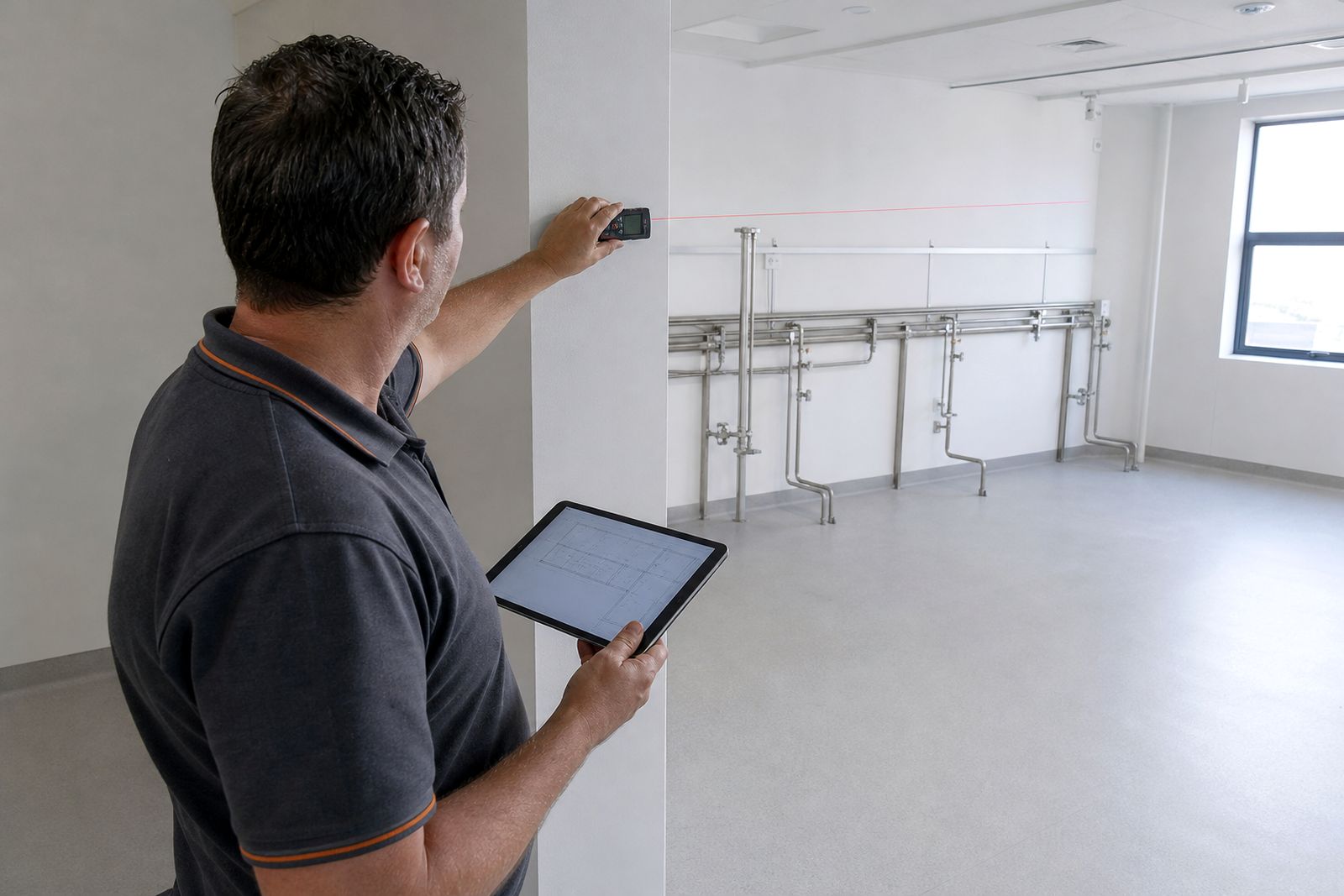
- Compilation of a handover file with marked-up drawings and service information
Step by step snag and close-out process
We run handover in a clear sequence so that nothing is missed and the operator team knows what is ready for review. First, our site team completes its internal pre-handover walk-through. This is where obvious touch-ups, cleaning items and small alignment issues are picked up before the formal snag. It saves time for everyone and keeps the final inspection focused.
Next, we arrange a joint walk-through with the operator's representatives, usually including facilities, engineering and the clinical side where required. Each room element is checked against the agreed brief and drawings. Any outstanding items are listed in a snag schedule with location, description and action owner. Small items can often be closed quickly, but wet works, sealant curing and access restrictions in live units sometimes need a return visit.
After snag capture, we close out each item and update the list until it is ready for final sign-off. Where a live facility has restricted working hours, we plan return visits around ward routines, contractor permits and municipal service interruptions if relevant. On the East Rand, and in many other parts of South Africa, load-shedding or generator changeover tests can affect testing windows, so we coordinate around that where needed.
- Internal pre-handover check by our site team
- Joint walk-through with operator representatives
- Snag list issued with item descriptions and locations
- Close-out visits for touch-ups, adjustments and final cleaning
- Final handover file submitted for operator records
Testing and practical checks before sign-off
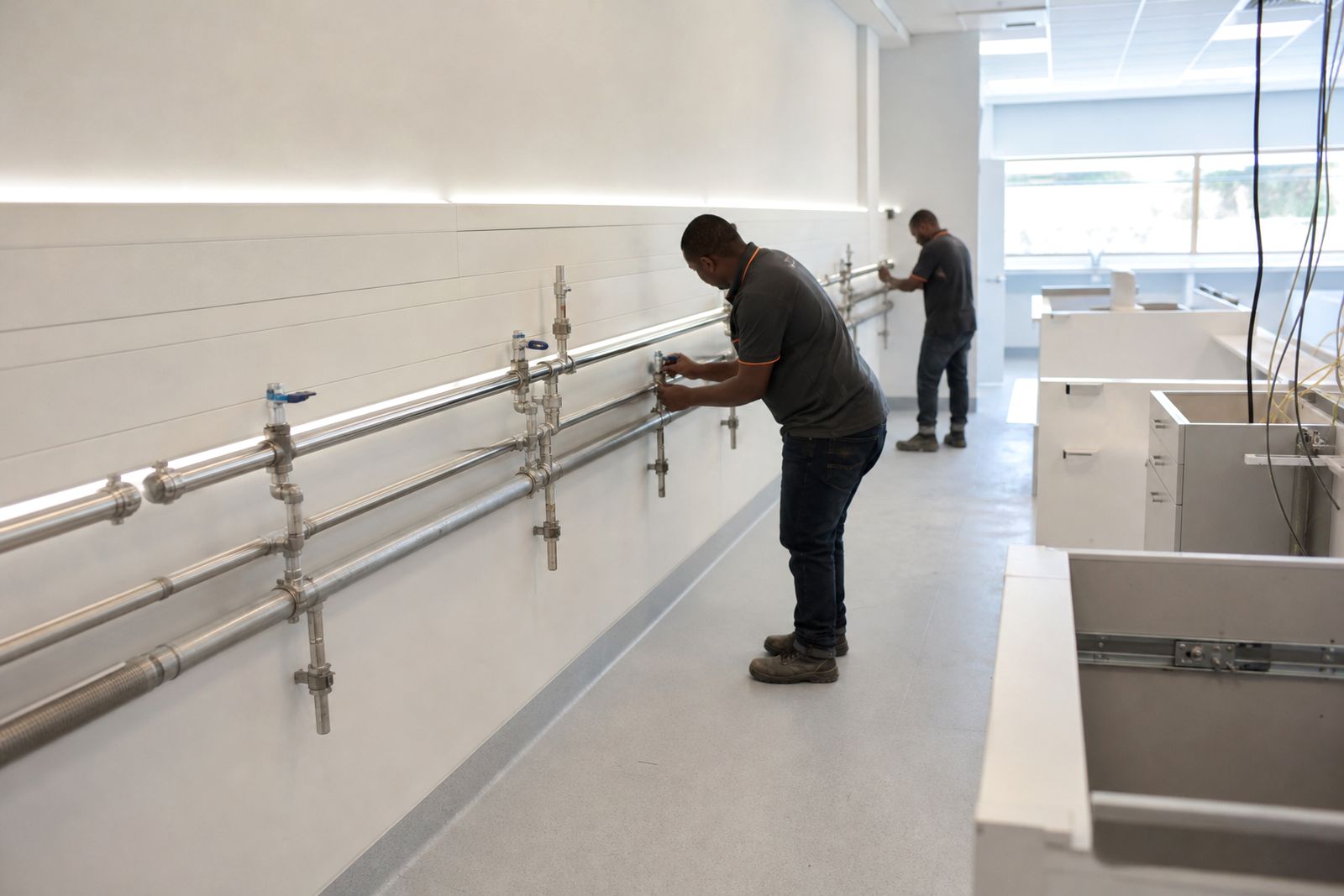
Handover is not just a paper exercise. We carry out practical checks on the installed fit-out elements within our scope so the operator team can review a room that is complete and orderly. Plumbing runs to treatment-chair bay points are checked for basic integrity and connection readiness, drainage points are checked for finish levels and clear access, and visible leaks or poor falls are addressed before sign-off where they form part of our work.
Electrical and lighting checks are similarly practical. We confirm that installed lights operate, socket outlets are in place and labelled where required by the brief, and switches work as intended. Joinery is checked for door swing, drawer operation, edge finish and silicone sealing. Floor and wall finishes are reviewed for continuity, cleanability and obvious defects. In coastal towns, humidity can affect curing times and sealant finish, so we allow for proper final inspection rather than rushing the room over too early.
- Lighting and socket point function checks
- Visible inspection of water-loop point readiness within our scope
- Drainage point level and access review
- Cabinet door, drawer and ironmongery adjustment
- Floor and wall finish inspection for clean joints and repair-free surfaces
What the client must prepare
The handover goes more smoothly when the operator team has its reviewers lined up and the room is accessible. Before the joint walk-through, the client should confirm who will attend from facilities, engineering and the clinical side, and whether any building access permits, infection-control approvals or escort requirements apply. In a live hospital this matters a lot, because a missed access slot can push the snag review out by days.
The client should also make available the latest approved clinical brief, any marked-up room changes agreed during the job, and the list of owner-supplied equipment positions that affect final checks. If specialist plant, water treatment equipment or dialysis machines are supplied by others, those items should be clearly identified as outside our scope so the handover list stays clean and practical. A bit of upfront coordination avoids confusion later and makes the sign-off less painful.
How pricing is worked out
Pricing for handover and snag work is usually tied to the fit-out scope, the size and complexity of the room or unit, and whether the work takes place in a live facility. A straightforward handover in a new area with normal access is simpler than multiple after-hours return visits in an operating day unit. Travel outside Gauteng, security requirements, staged access, waiting time for shutdowns and the level of documentation required all affect the final amount.
Where handover is part of a full fit-out package, many close-out activities are already included in the contract scope. Extra costs tend to arise when the brief changes late, owner-supplied items hold up final checks, or access constraints force repeated attendance. We explain the basis clearly before close-out work starts so the operator team knows what sits inside our scope and what may be treated as a variation.
- Fit-out size and number of rooms under review
- Complexity of plumbing, drainage and built-in joinery
- Live facility restrictions and after-hours access
- Distance from Kempton Park and travel requirements
- Extent of documentation, marked-up drawings and return visits
Aftercare and the handover file
Once the snag list has been closed, we issue a practical handover file for the completed works in our scope. This generally includes the final snag register, marked-up service information where relevant, finish schedules, care notes for flooring and wipe-clean wall surfaces, and records of any agreed changes made during the project. The file is intended to help the operator's engineering and facilities teams maintain the area properly after occupation.
Aftercare is focused on reasonable post-handover support for the installed fit-out elements. If a cabinet hinge needs adjustment after initial settling, or a sealant line needs review following nearby contractor work, we assess it and respond according to the agreed defects period and site access rules. We do not service dialysis machines or owner-supplied treatment equipment. Our role is to stand behind the room fit-out, keep the close-out trail clear, and leave the operator team with a handover pack they can actually use.
What our Dialysis Room Fit-Out customers say
Verified Google reviews
Questions we get asked
Do you sign off the room for clinical use?
No. We hand over the completed fit-out works within our scope, but the operator's own clinical and engineering team signs off the room against its internal brief and processes.
Can handover happen in a live hospital or day unit?
Yes. We plan around access controls, infection-control procedures, restricted hours and shutdown windows. In live facilities, snag close-out may be phased to suit the operator's routine.
What documents are usually in the handover file?
The file generally includes the final snag list, marked-up service information where relevant, finish and care notes, and records of agreed scope changes affecting the completed fit-out.
Also worth a look
Tell us about your dialysis room
Send a note through our contact form about the facility, the number of bays planned and where you are in the design process.
Open the contact form